🚨 If you smell gas right now: leave your home immediately and call from outside. Call +1-855-718-1500
🚨 Active Gas Leak Protocol

If you currently smell gas: leave your home immediately, do not operate any switches or open flames, and call your gas utility emergency line from outside. Then call us at +1-855-718-1500 once you are safely outside.

Licensed Gas Line Repair -- TX

Safety-First
Gas Line Repair
in Houston, TX

Professional gas line inspection, testing, repair, and installation by licensed plumbers in Houston, TX. Permitted work, pressure-tested results, and a clear explanation of every step from arrival to sign-off.

24/7 Emergency Response Available
Why Gas Work Requires Specialists
🏭

Licensed & Permitted

Gas line work in Houston, TX requires specific licensing and permits. Every job we complete is properly permitted and inspected where required by local code.

⚡

Emergency Dispatch

24/7 availability for suspected gas leak calls. We prioritize these calls above all others -- your safety cannot wait for a business-hours appointment.

💰

Flat-Rate Pricing

Clear pricing before any work begins. Gas repairs are sensitive work, not an opportunity for open-ended hourly billing. You know the cost upfront.

🔧

Pressure-Test Every Job

No gas line repair or installation leaves our hands without a full pressure test to verify leak-free integrity across the entire affected pipe run.

Gas Line Repair in Houston, TX Performed Safely and by the Code

⚠ Active Gas Leak? Do This First

If you currently smell gas: leave your home immediately. Do not operate any electrical switches, light matches, or use a phone inside the home. Close the door behind you and call your gas utility's emergency line from outside. Once the utility has been notified and you are at a safe distance, call Process Plumbing Services at +1-855-718-1500 for professional repair response.

Gas line work is among the highest-stakes plumbing services a homeowner can commission, and it is one area where cutting corners or working with an unlicensed contractor carries consequences far beyond a failed repair. Natural gas and propane are both colorless, and while utility companies add the distinctive sulfur-like odor as a safety measure, small or slow leaks can accumulate in enclosed spaces to dangerous concentrations before the smell becomes obvious. This is why proper testing procedure -- not just a visual inspection -- is the professional standard for any gas line service.

When our licensed plumbers perform gas line work in Houston, TX, every job begins and ends with a pressure test. We isolate the affected section of pipe, pressurize it to the appropriate test pressure for the pipe diameter and fitting type, and hold that pressure while monitoring for any drop. A stable pressure reading across the full test period confirms the integrity of every joint, fitting, and connection in the tested section. This is not optional -- it is the only way to verify that gas line work is actually safe. Any plumber who tells you a visual inspection is sufficient on a gas system has not given you a professional-grade service.

Understanding the pipe materials in your home matters for repair decisions. Older homes, particularly those built before the 1980s, commonly used black iron pipe for interior gas supply runs. Black iron is durable when joints are properly sealed with approved thread sealant, but it corrodes from the outside over decades and can develop external pitting that eventually compromises wall thickness. More recent construction often uses corrugated stainless steel tubing, known as CSST. CSST is flexible, installs quickly, and has an excellent service record, but it requires proper bonding and grounding to protect against the rare possibility of lightning-induced arc damage. Improperly bonded CSST is a code violation in most jurisdictions, and we check bonding status as part of every CSST service call.

New gas line installation -- for a generator hookup, a kitchen range conversion from electric, a gas dryer addition, an outdoor grill connection, or a whole-house addition -- requires permit pulling in most Houston, TX jurisdictions. The permit process exists to ensure the work is inspected by a qualified building inspector who verifies code compliance independently of the contractor. We handle permit applications as part of our installation service and coordinate the inspection schedule so you are not managing a bureaucratic process alongside a plumbing job. When the inspection passes and the permit is signed off, you have a documented record of compliant work that protects you in future insurance claims or property transactions.

For gas appliance connections -- a new range, a gas water heater, a fireplace insert -- the work involves the flexible appliance connector, the shutoff valve upstream of the appliance, and the branch line feeding that shutoff. These connections require the correct connector type for the appliance, the correct rated shutoff valve, and a pressure test after assembly. We perform all of these steps on every appliance connection, including final verification that the appliance operates correctly on the gas supply before we consider the job complete.

Gas Safety Quick Reference

  • Smell gas: leave first, call from outside
  • Do not flip switches or use open flames
  • Do not try to locate the leak yourself
  • Call your gas utility first if actively leaking
  • Only licensed plumbers should perform gas work
  • All gas work requires a pressure test
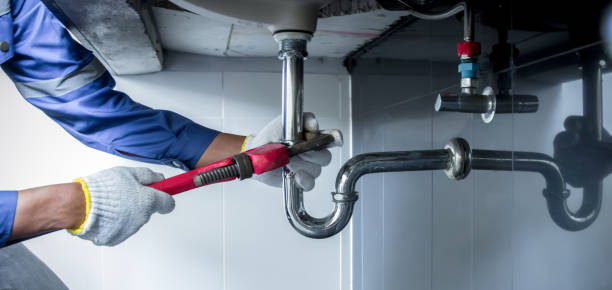
Gas line inspection Houston, TX
Licensed Gas Plumbers
Permitted work, pressure-tested results

24/7 Emergency

Gas emergencies do not follow a schedule. Call any time, any day.

Call +1-855-718-1500
Complete Gas Line Services in Houston, TX

From emergency leak detection to new gas line installation, every job is performed by licensed plumbers with full pressure-test verification.

🚫

Gas Leak Detection

Professional gas leak detection using electronic gas sniffers and bubble solution testing across all joints, fittings, and appliance connections in your home or building.

📈

Gas Line Pressure Testing

Comprehensive pressure testing of supply lines and branch runs following any repair or new installation to verify leak-free integrity before gas service is restored.

🏠

New Gas Line Installation

Permitted gas line installation for new appliances, generator hookups, outdoor kitchens, or gas service additions -- from permit application through final inspection sign-off.

🅾

Appliance Gas Connection

Flexible connector installation, shutoff valve replacement, and pressure-verified connection for gas ranges, dryers, water heaters, fireplaces, and generators.

⚡

CSST Bonding & Grounding

Bonding and grounding of corrugated stainless steel tubing per current code requirements, protecting CSST from lightning-induced arc damage and bringing installations into compliance.

🔧

Gas Shutoff Valve Replacement

Replacement of corroded, non-operating, or non-compliant gas shutoff valves at appliances and main service, including full pressure verification after installation.

Gas Line Service from Call to Safe Completion

1

Call

Describe the situation -- suspected leak, appliance connection, new installation. For active leak calls, we triage immediately and dispatch on emergency priority.

2

Dispatch

A licensed gas plumber arrives at your Houston, TX address. For new installations we coordinate permit timing. For repairs we bring appropriate pipe, fittings, and testing equipment.

3

Assessment & Quote

The tech inspects the line, performs an initial gas detection sweep, and provides a flat-rate price for the required repair or installation. You approve before any work begins.

4

Repair, Test & Sign-Off

We complete the work, perform a full pressure test, and restore gas service only after passing. Permitted jobs are held for inspection; we coordinate that final sign-off on your behalf.

Trusted by Houston, TX Homeowners for Gas Work

★★★★★

"Smelled a faint gas odor near my water heater and called Process Plumbing Services. The tech was there within two hours, found a fitting that had loosened at the flex connector, and repaired and pressure-tested the whole connection. Explained every step. Professional and thorough -- exactly what you want on a gas call."

Patricia N. - Houston, TX
★★★★★

"I was adding a gas range to a kitchen that had previously had electric and needed a new branch line run. Process Plumbing Services handled the permit, ran the line through the wall from the main supply, and coordinated the inspection. The inspector passed it first visit. Clean work, no surprises on price."

Glenn R. - Houston, TX
★★★★★

"Had an old CSST run in my house that a home inspector flagged as needing bonding. Called Process Plumbing Services and they came out, verified the run, installed the proper bonding equipment, and gave me documentation for my insurance company. Knew exactly what code required. Five stars without hesitation."

Sandra M. - Houston, TX

Gas Line Repair FAQ

What should I do if I smell gas? ▼
If you smell gas in your home, leave immediately. Do not turn any electrical switches on or off, do not use a lighter or match, do not open a garage door with an electric opener, and do not use a phone inside the home. Leave the door open if it is easy to do so without lingering, then move well away from the building. Call your gas utility's emergency line from outside or from a neighbor's home -- the utility will dispatch to shut off service at the meter. After the utility has been notified and you are at a safe distance, call Process Plumbing Services at +1-855-718-1500 to schedule professional leak location and repair once the area has been cleared.
How do plumbers test for gas leaks? ▼
Professional gas leak testing uses two primary methods: electronic combustible gas detectors, which sense even very small concentrations of natural gas or propane and give an audible or visual alert, and leak detection solution applied to all joints and fittings, which bubbles visibly when gas is escaping. For more comprehensive testing -- confirming leak-free integrity across an entire pipe run -- we perform a pressure test: the affected section is isolated and pressurized to a specified test pressure, then held at that pressure while monitoring a gauge. Any pressure drop indicates a leak somewhere in the isolated run. This pressure test method is required by code for all new gas installations and is best practice after any repair.
Is CSST gas line safe? ▼
Corrugated stainless steel tubing (CSST) is safe when properly installed and bonded according to current code requirements. It has been used in residential construction since the late 1980s and has an excellent service record. The one documented risk with CSST is that its thin corrugated walls can be punctured by electrical arcing during a nearby lightning strike. To mitigate this, current codes require CSST to be bonded and grounded to the home's electrical grounding system, which equalizes potential and prevents arcing. Homes with older CSST installations that predate bonding requirements may have unbonded CSST, which is a code violation and an insurable risk. We inspect and bond CSST as needed on any service call where CSST is involved.
Do gas line repairs require a permit? ▼
In most Houston, TX jurisdictions, new gas line installations and significant modifications -- such as adding a branch line, extending a run, or relocating a gas supply -- require a permit. Like-for-like repairs such as replacing a leaking fitting or a failed shutoff valve at an existing appliance connection may not require a permit, but requirements vary by municipality. We are familiar with permit requirements across our TX service area and will advise you on what is required for your specific job. For jobs that require permits, we handle the application as part of our service and coordinate the required inspection. Unpermitted gas work can create liability issues in insurance claims and complicate future property sales.
Can a plumber work on natural gas and propane lines? ▼
Yes. Licensed plumbers who hold gas work endorsements are qualified to work on both natural gas and propane (LPG) supply systems. Natural gas and propane use the same pipe materials -- black iron and CSST being the most common -- but require different test pressures, different regulator settings, and in some cases different appliance orifice configurations. Propane systems also include the tank and regulator assembly on the supply side, which has its own service protocols. Our plumbers are licensed and experienced with both fuel types and will confirm your system type before beginning any work to ensure the correct materials and procedures are applied.
How much does gas line repair cost? ▼
Gas line repair costs vary significantly based on the scope of work: a simple fitting replacement or flex connector repair at a single appliance is a straightforward job, while a slab or wall penetration leak that requires rerouting a pipe run involves significantly more labor and material. New gas line installation cost depends on the length of the run, the number of fittings and shutoff valves required, and whether the job requires a permit and inspection. We provide flat-rate pricing before any work begins so you know exactly what you are committing to. Call us at +1-855-718-1500 to describe your situation and receive a clear estimate.

Gas Line Service Throughout Houston and Houston, TX

Licensed gas plumbers serving homeowners and property owners across TX. Call +1-855-718-1500 day or night for gas line emergencies.

Houston, TX Surrounding Houston, TX Communities Metro & Suburban Areas Surrounding Counties

Our Services in Houston, TX

Houston (/ˈhjuːstən/ i; HEW-stən) is the most populous city in Texas and in the Southern United States. It is the fourth-most populous city in the United States after New York City, Los Angeles, and Chicago, and the sixth-most populous city in North America. With a population of 2,302,878 in 2022, Houston is located in Southeast Texas near Galveston Bay and the Gulf of Mexico; it is the seat and largest city of Harris County and the principal city of the Greater Houston metropolitan area, which is the fifth-most populous metropolitan statistical area in the United States and the second-most populous in Texas after Dallas–Fort Worth. Houston is the southeast anchor of the greater megaregion known as the Texas Triangle.

Zip Codes in Houston, TX that we also serve: 77069 77068 77061 77060 77063 77062 77065 77064 77067 77066 77346 77571 77036 77037 77034 77035 77032 77033 77030 77031 77038 77449 77489 77044 77043 77042 77204 77598 77018 77019 77015 77016 77017 77010 77011 77012 77013 77094 77093 77092 77345 77547 77025 77024 77027 77026 77021 77020 77023 77022 77029 77028 77096 77090 77091 77098 77099 77078 77079 77072 77073 77070 77071 77076 77077 77074 77075 77407 77047 77046 77045 77041 77040 77048 77336 77339 77338 77003 77002 77007 77006 77005 77004 77009 77008 77450 77082 77084 77089 77088 77083 77081 77080 77087 77086 77085 77053 77054 77055 77056 77057 77058 77059 77396 77051 77506 77504 77001 77052 77201 77202 77203 77205 77206 77207 77208 77209 77210 77212 77213 77215 77216 77217 77218 77219 77220 77221 77222 77223 77225 77226 77227 77228 77229 77230 77231 77233 77234 77235 77236 77237 77241 77242 77243 77244 77245 77248 77249 77251 77252 77253 77254 77255 77256 77257 77259 77261 77262 77263 77266 77269 77270 77271 77272 77273 77274 77275 77282 77284 77287 77288 77289 77291 77292 77293 77297 77299 77315 77325 77411 77095 77049 77039 77014 77050 77258 77267 77277 77279 77280 77290 77224 77238 77240 77265 77268

Cities Close To Houston, TX That We Also Serve


Gas Line Repair Express #1
★ 4.9 (120+ Reviews)
Dispatch Center, TX
Call +1-855-718-1500
Gas Line Repair Express #2
★ 4.9 (120+ Reviews)
Dispatch Center, TX
Call +1-855-718-1500
Gas Line Repair Express #3
★ 4.9 (120+ Reviews)
Dispatch Center, TX
Call +1-855-718-1500
Gas Line Repair Express #4
★ 4.9 (120+ Reviews)
Dispatch Center, TX
Call +1-855-718-1500
Gas Line Repair Express #5
★ 4.9 (120+ Reviews)
Dispatch Center, TX
Call +1-855-718-1500
Gas Line Repair Express #6
★ 4.9 (120+ Reviews)
Dispatch Center, TX
Call +1-855-718-1500
📞 Call Now -- 24/7
🟢 Techs On Duty in Houston, TX Call +1-855-718-1500